Welcome!
Take your time exploring the tabs or my profile preview! I'm excited to share a thing or two that just might resonate with you.
Introduction
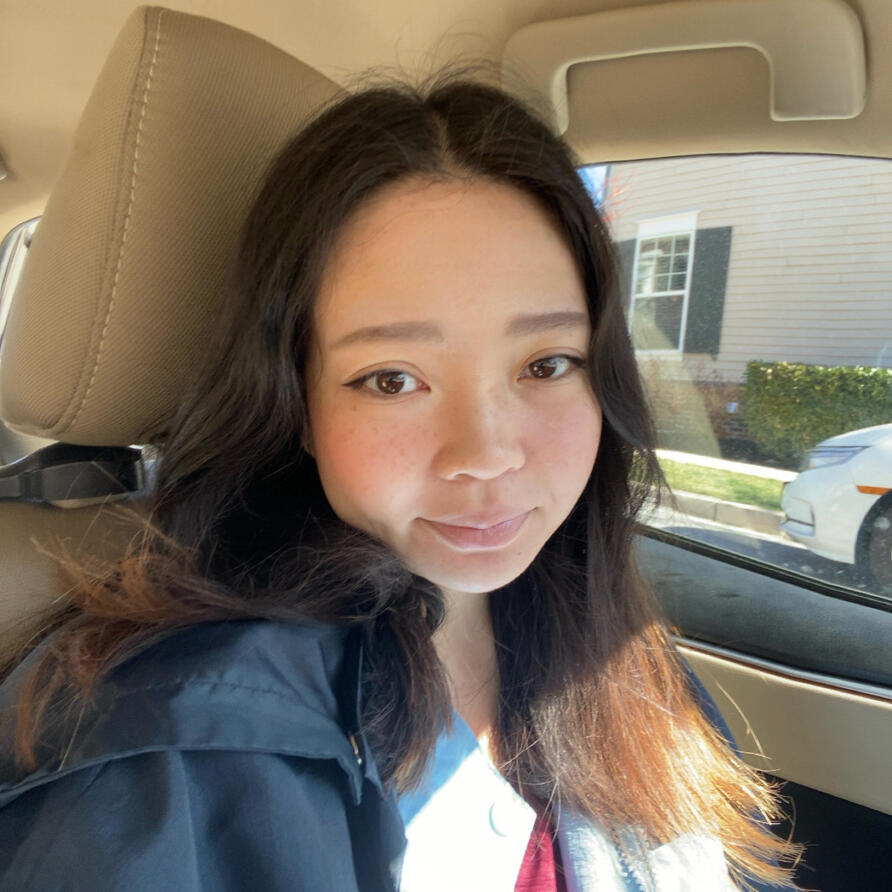
✦ Philana Hin
✦ Neuroscience B.S., Entrepreneurship Minor
✦ University of Maryland, College Park
Nice to meet you! I'm
Philana
[fih-lah-nuh]
a Maryland-based undergraduate who loves all things 'marketing', from cognitive processing to visual appeal.As a neuroscience student balancing the bioscience world with an avid niche for entrepreneurship, I always look forward to learning more about how health and design can positively influence today's consumerism.
Projects
Works, commissions, case studies, and everything in between.

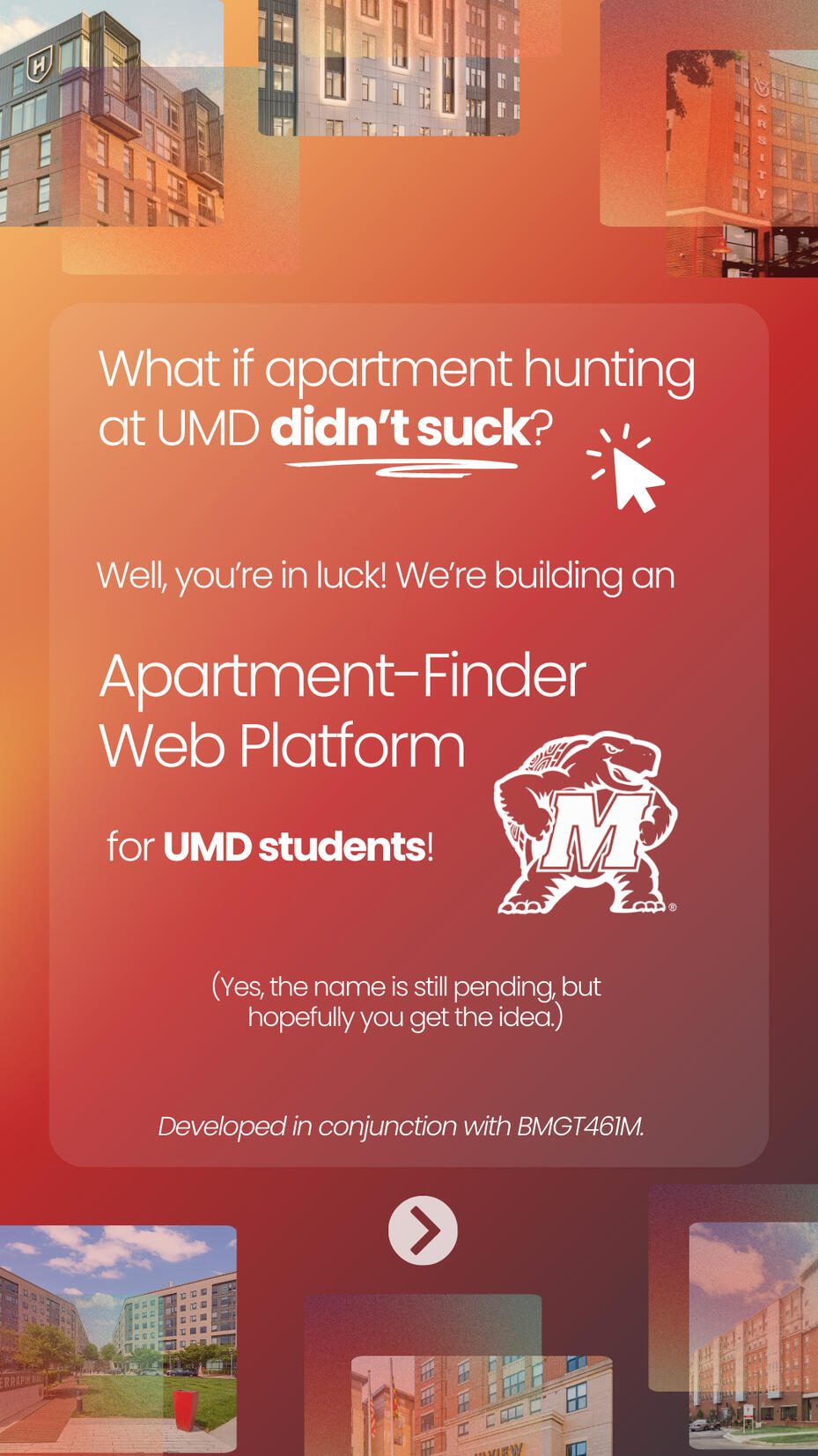
Kato | UMD Apartment Finder

Startup Shell

Notion

SoftSpot®


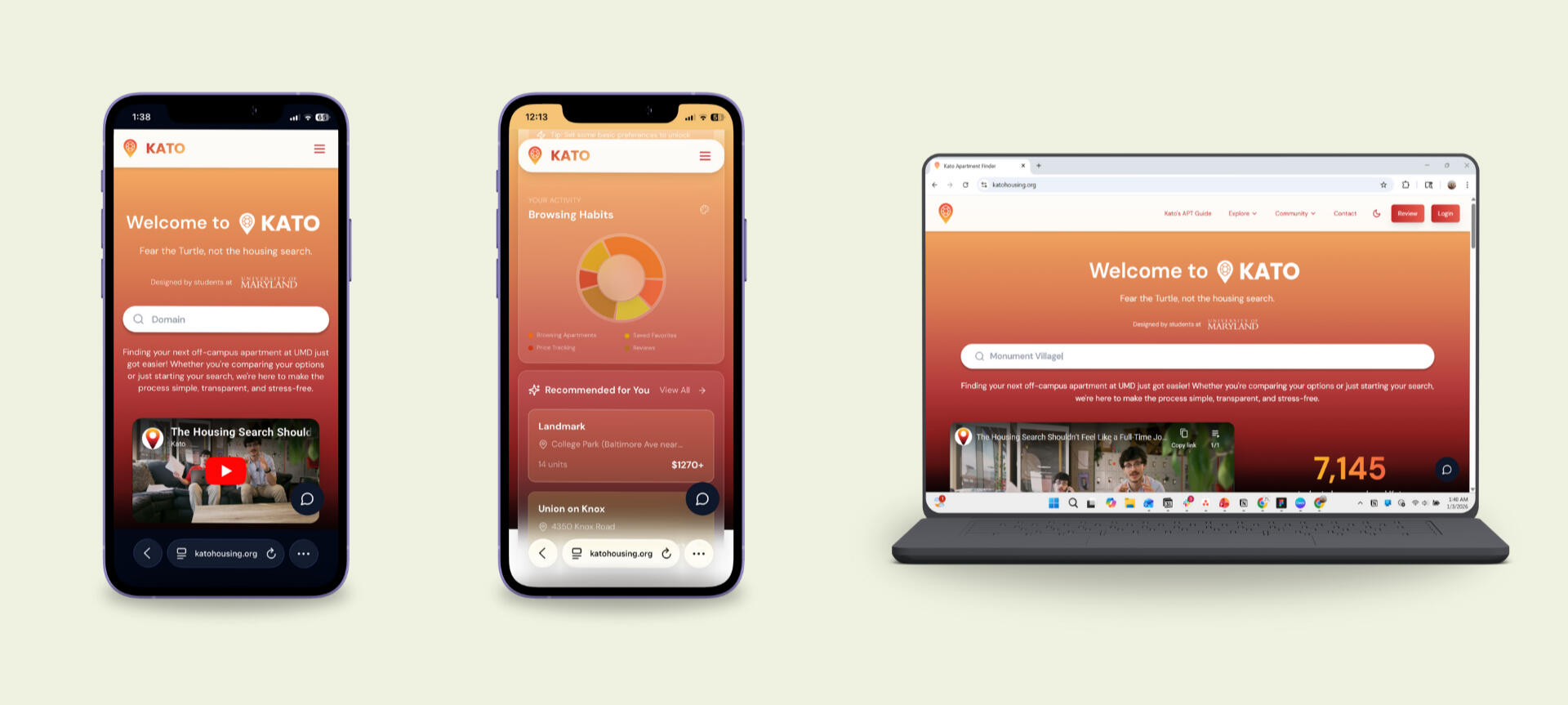
Simplifying the off-campus housing search for college students.
Overview
➤ Timeline: October 2025 - Present (14 weeks)
➤ Project Purpose: Startup derived from BMGT461M: Entrepreneurship at UMD, continued outside of the course
➤ Role: Lead UX Designer/CXO in a team of 4
The Problem
Fragmented platforms create friction in the student housing search.
While searching for off-campus housing with friends during my transition from freshman to sophomore year, I quickly experienced how overwhelming the process can be. This prompted the question: how might the student housing search be made significantly easier?
The Solution
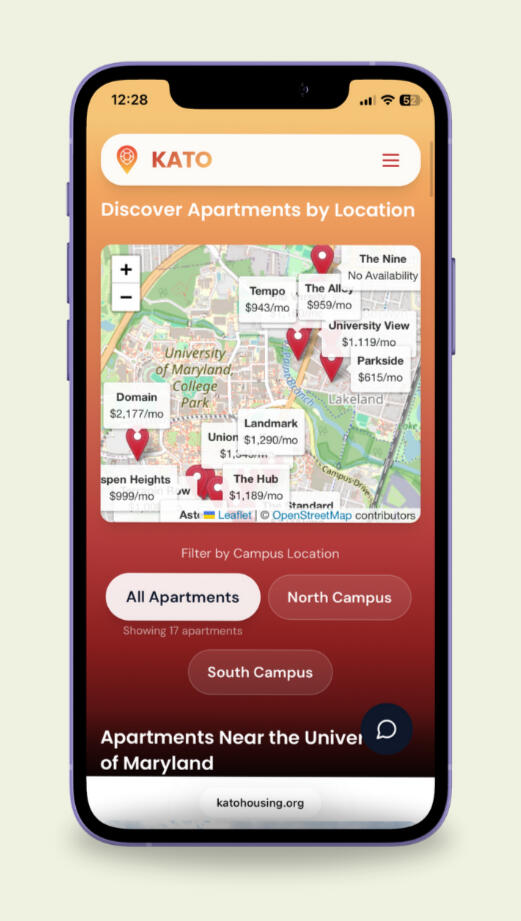
Location-Based Discovery
➤ Mirrors how students already think about campus geography.
➤ Narrows choices early, reducing overwhelm.
➤ Improves spatial understanding through an interactive, map-based interface.
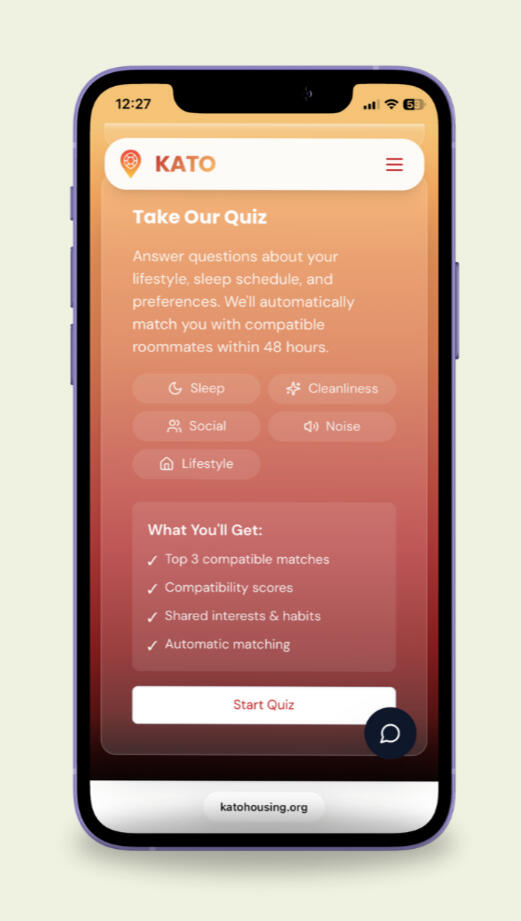
Guided Roommate Matching
➤ Structures roommate compatibility through a quick, guided quiz.
➤ Highlights top matches with clear compatibility scores.
➤ Maintains user autonomy through off-platform contact.
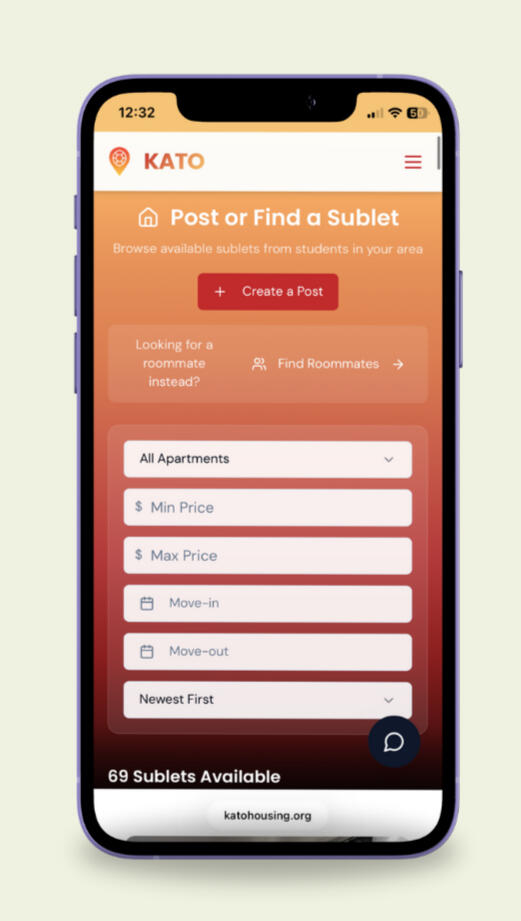
Sublet-Focused Search
➤ Brings short-term and nontraditional housing to the forefront.
➤ Supports changing student timelines without rigid lease constraints.
➤ Centralizes sublet discovery to reduce unnecessary search friction.
Market Comparison
The student housing search needs to be personal, intuitive, and affordable.
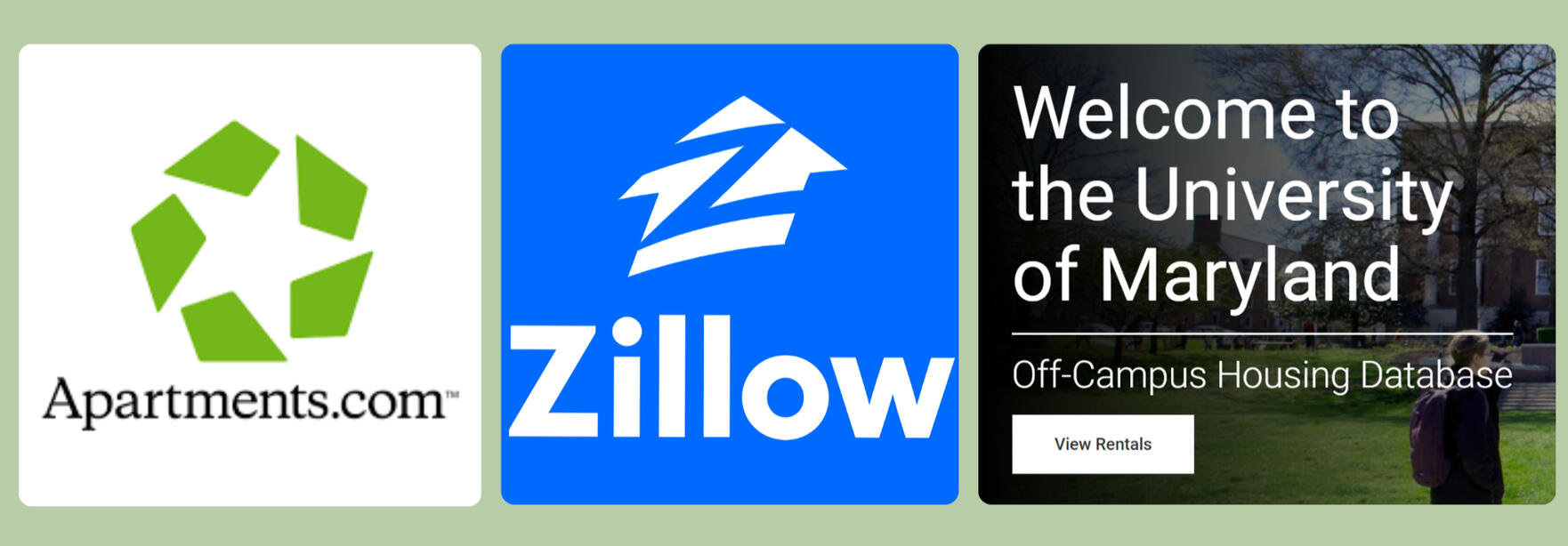
After exploring the web frameworks of existing platforms like Apartments.com, Zillow, and UMD’s off-campus housing (OCH) database, I saw that Kato could pair affordability with a more personal, intuitive experience for students finding their first independent apartment.
Customer Discovery
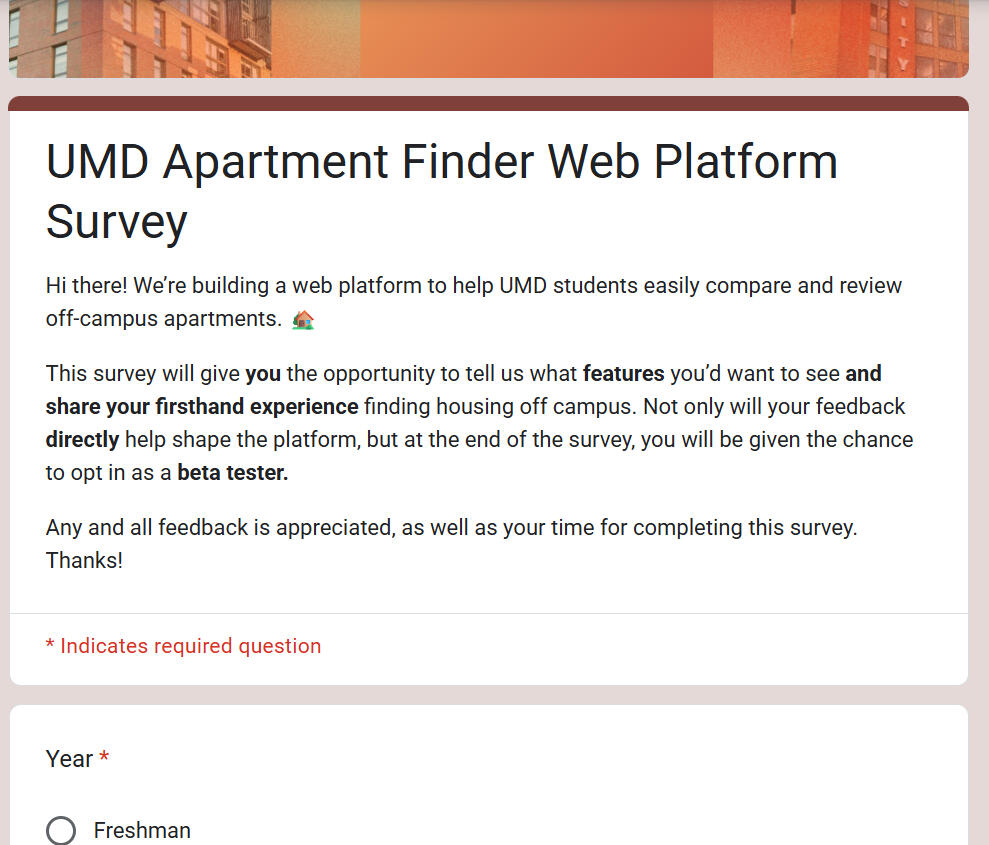
Google Survey Recruitment
To understand how students evaluate off-campus housing, my team conducted a Google Survey, collecting 38 responses over 24 hours. We asked about housing preferences and factors influencing apartment decisions to surface patterns in student priorities.
Research Questions
These questions shaped design decisions that simplify and visualize the student housing search.
1. Current and past off-campus experience: How many students are living off-campus, planning to, or have lived off-campus?
2. Preferences: What are, or were, students’ top apartment choices?
3. Barriers: Why do students avoid certain apartment complexes?
4. Friction points: What are the biggest frustrations during the apartment search?
5. Confidence: How reliable do students find online housing information?
6. Decision drivers: What factors most influence students’ apartment decisions?
Results
Students value convenience and credibility above all.
Priority 1:
Price
(56%)
Priority 2:
Proximity to Campus (44%)
Priority 3:
Reviews/Reputation
(27%)
➤ 3 in 4 said finding accurate online information was “frustrating or unreliable.”
➤ 90%+ expressed they would use a platform to compare prices, amenities, and student opinions.
➤ Top requested features: Price tracking, comparison charts, review transparency.
"Best in Customer Discovery" — Pitch Dingman Luby Idea Track ($3K Award)
Our results earned us recognition from the judges in the annual Pitch Dingman Luby Idea Track competition, hosted by the Robert H. Smith School of Business at the University of Maryland. Our team was selected as one of the top 20 finalists, chosen as one of the top 9 winning teams, and awarded $3K for "Best in Customer Discovery".Read more about our participation in the competition here.
Branding
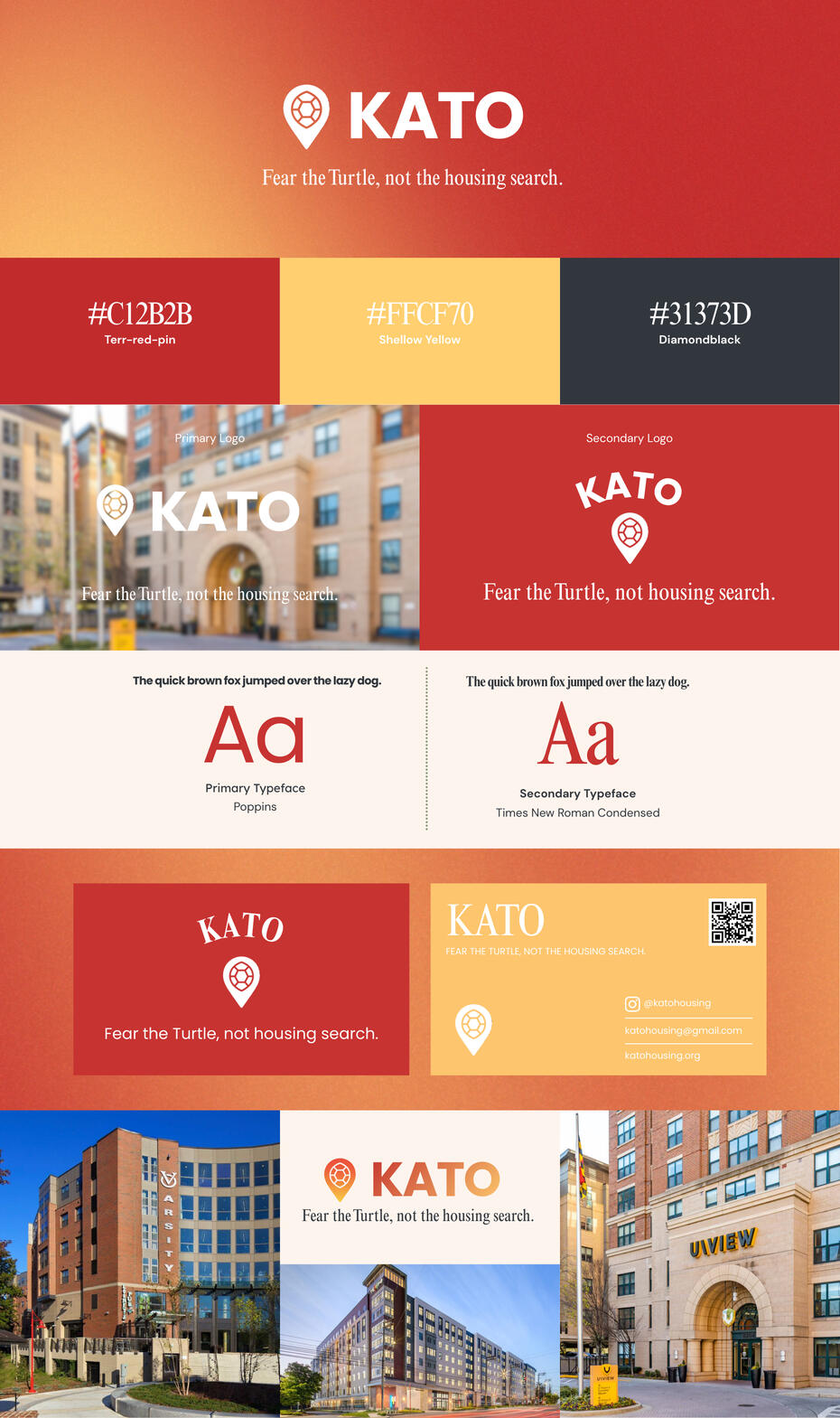
Kato's Brand
While we hope to expand to other universities in the future, Kato’s brand was designed to feel distinctly UMD. Custom color tints echo the school’s red, yellow, and black, while the primary and secondary fonts (Poppins and Times New Roman Condensed) reflect modern typography trends. Together, these choices communicate a simplified, contemporary approach to student apartment searching.

Iterations
A selection of key feature iterations that addressed user needs from the survey and website maintenance.
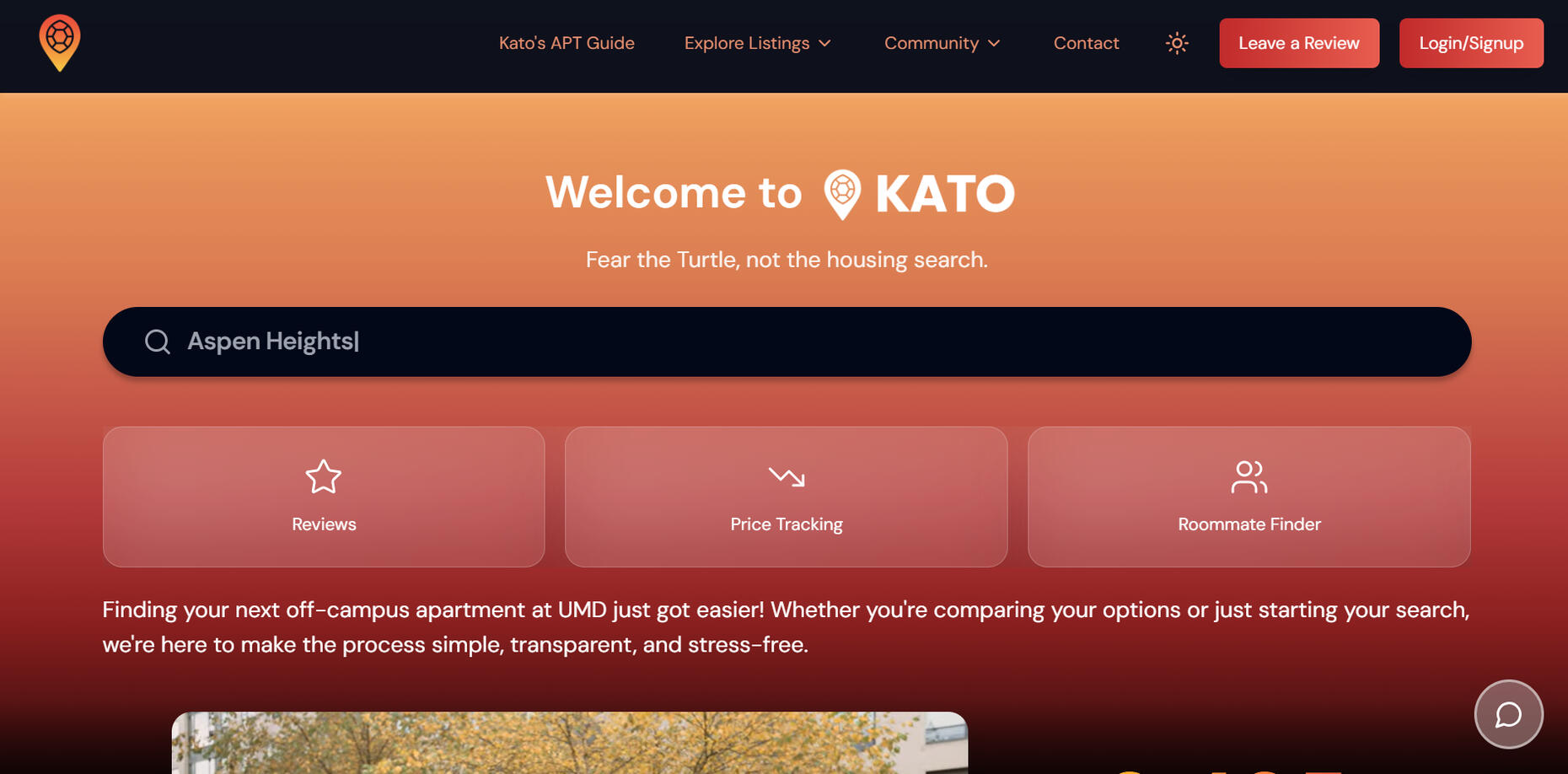
1. Landing Page Redesign
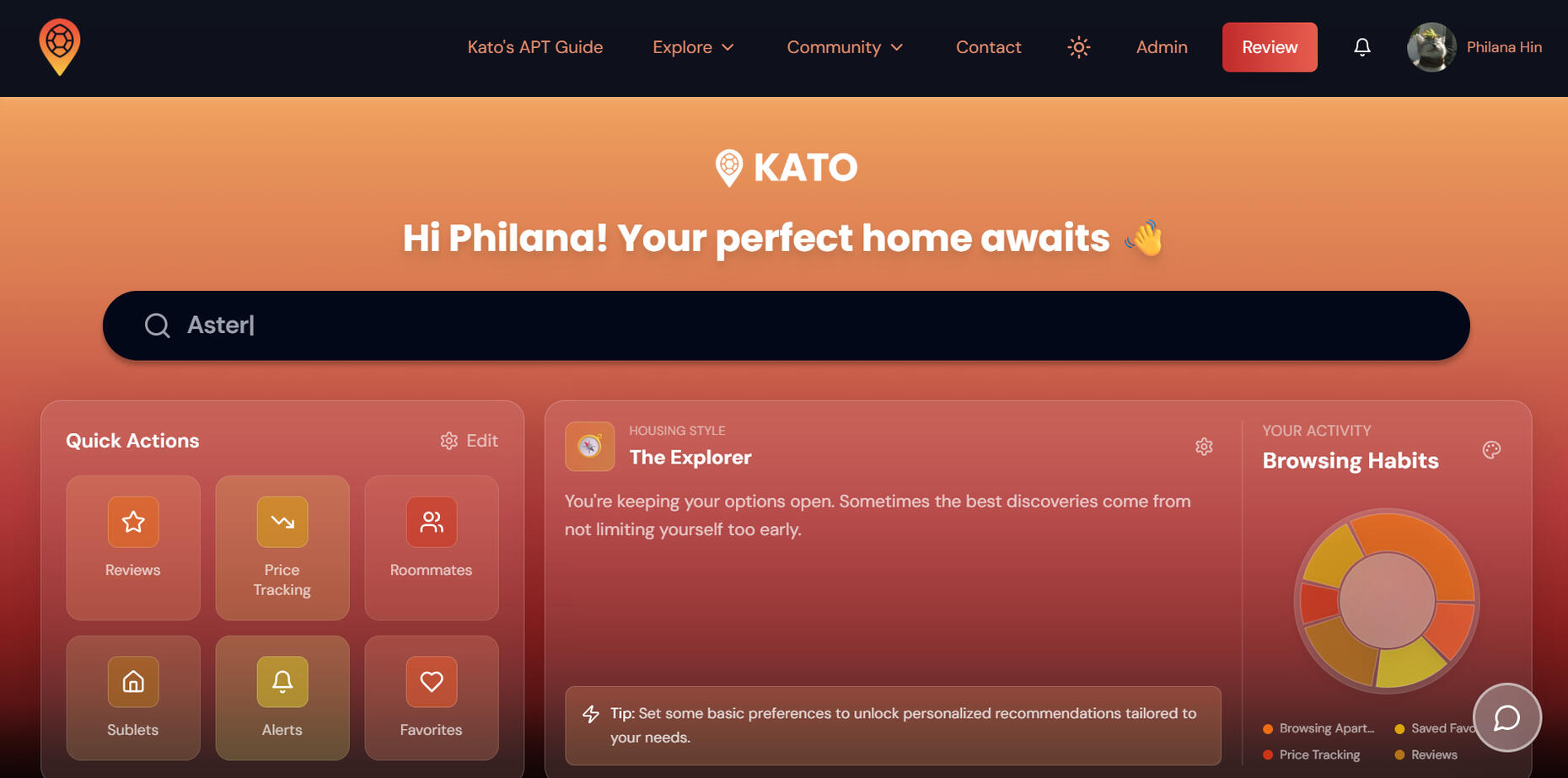
➤ Created distinct experiences for new users (overview + CTAs) vs. logged-in users (personalized dashboard with activity wheel).
➤ After observing usage within our team and gathering feedback from a few UMD students, I realized the landing page had become redundant for registered users. Therefore, I redesigned it to feature a personalized welcome and dashboard for logged-in users.
2. Location-Based Filtering
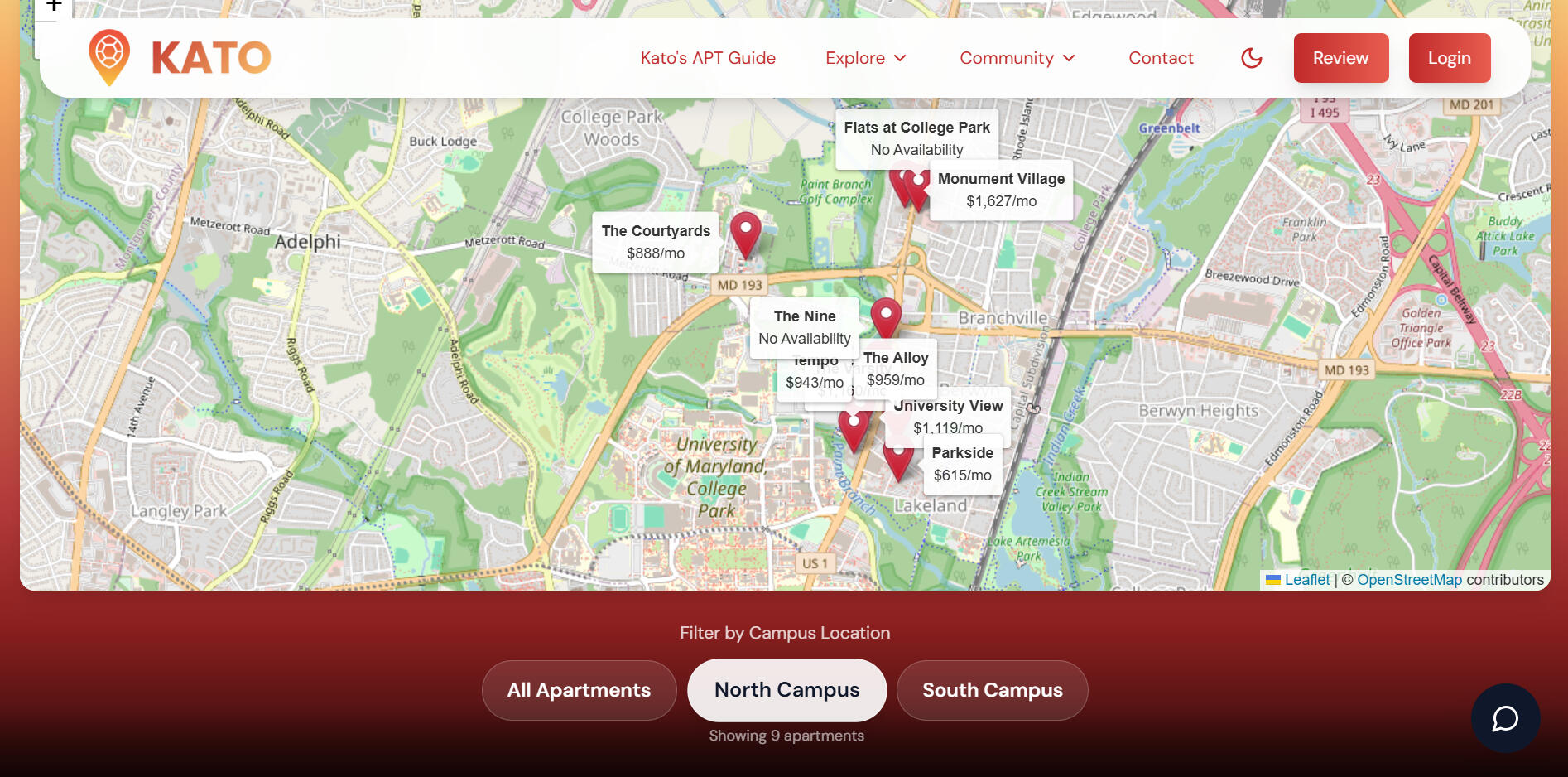
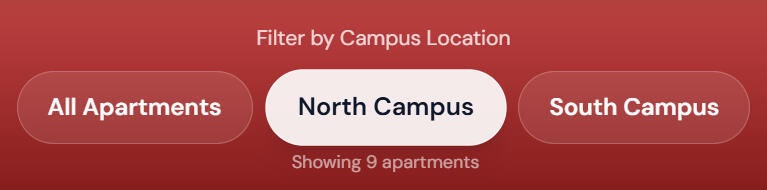
➤ Added North/South campus buttons to prioritize apartments based on class proximity, reflecting survey insights.
➤ With 44% of surveyed students prioritizing campus proximity, I focused on a north/south split to reflect class locations, keeping the selection intuitive while leaving room for future refinement.
3. Cross-Feature Navigation
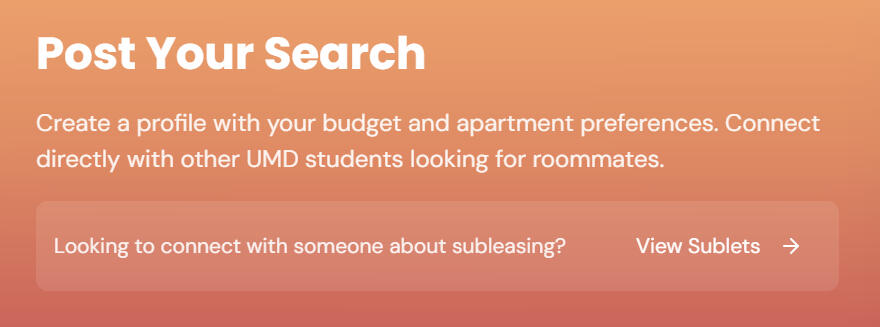
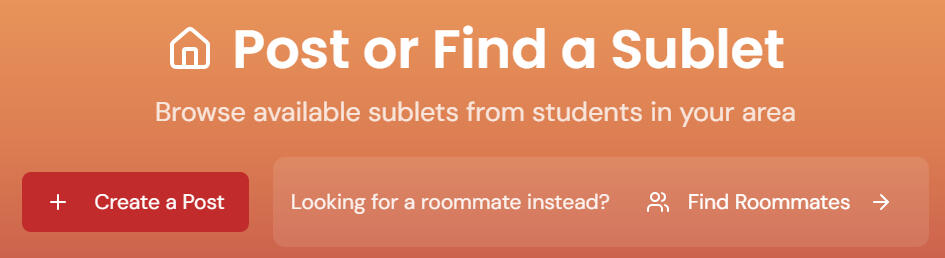
➤ Introduced redirect buttons between roommate and sublet tabs to mitigate navigational confusion.
➤ After noticing users mistakenly searching for roommates in the subletting tab (and vice versa), I added redirect buttons to improve discoverability and reduce friction.
Reflections
Remembering to consider outliers and test personalization.
Looking back, my team and I focused on general patterns and didn’t account for outliers, relying on assumptions for what we considered “minor” needs. That being said, I would have spent more time interviewing extreme users—particularly those like me who ultimately chose to commute rather than navigate the tedious apartment search and coordinate with friends over fluctuating prices.I also would have explored algorithmic features earlier, inspired by social media interfaces, to see if a more personalized, feed-like experience could have strengthened our launch.
Next Steps
Maintaining transparency while planning future expansions and partnerships.
In the short term, we’re focused on keeping Kato simple, transparent, and easy to use for UMD students. Longer-term, we plan to partner with local apartments, expand to other colleges, and continue smoothing the housing search experience.As Kato's CXO, I still actively maintain the site's visuals and functionality for friction points and opportunities to improve both the student workflow and future business-facing features.
Explore Kato
Discover more of Kato by visiting katohousing.org, or checking out the company's LinkedIn and Instagram.



Project description coming soon...

Project description coming soon...

In the meantime, please enjoy watching the animation I made for this project!

Project description coming soon...
Project description coming soon...
ABOUT
Hi there—it's great to have you here! Thanks for taking the time to learn more about me.
Neuroscience versus & Marketing
I’ve always been fascinated by the brain. After all, it’s where the world of emotions and logic collide.Since early high school, I’ve explored that fascination through scientific research, from studying dissociative identity disorder (DID) in my school’s independent research program to working on in vitro neuro-metastatic drug development during lab rotations.But even in the middle of all the data and discovery, I found myself craving a creative balance—something that let me translate the science into something visual, intuitive, and human.
Although many of my studies continue to align with the pre-health pathways, I often find my coursework blending naturally with marketing and neuromarketing.
“How?” Glad you asked!
✦ Through courses like Statistical Methods in Psychology, I’ve explored R programming, correlational design, and key statistical tests (e.g., z-tests, t-tests, and ANOVA) that directly inform neuromarketing strategy and consumer research.
✦ I've designed infographics and health visuals with cognitive load theory in mind, balancing engagement and clarity for patient (user) education and outreach.
✦ I prioritize incorporating behavioral psychology into personal and team design workflows, testing how font choices, animation speed, and layout affect attention and message retention.
Design Philosophy


Design is not transactional; it's a shared experience.
The purpose of design is to convey a authenticity and to create a timeless visual connection between an audience and a brand.From a psychological perspective, behind every color choice or animation cue, there’s a decision influenced by how we process visuals, recall memories, or respond emotionally. Therefore, I design with people in mind, hoping the things I create don’t just inform, but inspire.To me, design isn’t simply a promotional output, but the invitation to create connection and community.
Current Projects


Background
As I explore intersections between health and marketing, I prioritize application and hands-on practice whenever possible. Currently, I'm working on:
✦ Content creation, lead generation optimization, and Amazon storefront prototyping for PediaMetrix Inc. SoftSpot® the first and only AI, FDA-cleared, and HIPAA-compliant mobile app for cranial measurements.
✦ Creating organic chemistry animations that simplify complex concepts for students and learners.
✦ Experimenting with fresh animation transitions and developing promotional content for local brands and community programs.
✦ Developing and designing user-focused website interfaces for my personal brand and a local medical clinic.
GALLERY
Take a special look at a selection of designs.
Lettering
Lettering is where my artistic journey began. Ever since learning cursive in 4th grade, I’ve grown that curiosity into calligraphy and typography—skills that have shaped my creative identity and led me to pursue leadership roles and projects centered around the art.


Graphic Designs
Graphic design provides a flexible space for me to experiment (outside of a lab!). In my spare time, I enjoy entering design competitions, from stickers and T-shirts to murals and more. Working across different media motivates me to stay creative and explore how versatile graphic design can be.


Motion Designs
Animation is a service I genuinely enjoy offering, and one that many of the programs and organizations I’ve worked with value just as much. Although time-intensive, creating thoughtful, custom animations is central to effective marketing and product design, and a skill I’m always eager to grow.


Fun Fact: The GIFs above also exist as short reels with sound! If you're interested in a preview or discussing a potential collaboration, feel free to reach out.
CONTACT
Whether it's a quick hello or a project idea, I'd love to connect!
Have questions? Interested in collaborating? Don't hesitate to reach out to me at any one of the following:
✦ [email protected] for marketing/design requests, chats, and inquiries
✦ Philana Hin on LinkedIn